The global travel and tourism industry has always mirrored technological progress, but the transformation underway in 2026 represents a fundamental shift rather than an incremental upgrade. Artificial intelligence, intelligent automation, virtual experiences, and biometric systems are redefining how travelers plan, book, experience, and remember their journeys.
What makes this evolution different from previous digital disruptions is its scope. Instead of improving isolated touchpoints such as booking engines or loyalty apps, emerging technologies are redesigning the entire travel ecosystem from pre-trip inspiration to post-trip engagement. For airlines, hotels, tour operators, and destination managers, understanding these changes is no longer optional; it is critical for long-term competitiveness.
This article explores the key technology trends shaping the future of travel and hospitality in 2026 and beyond.
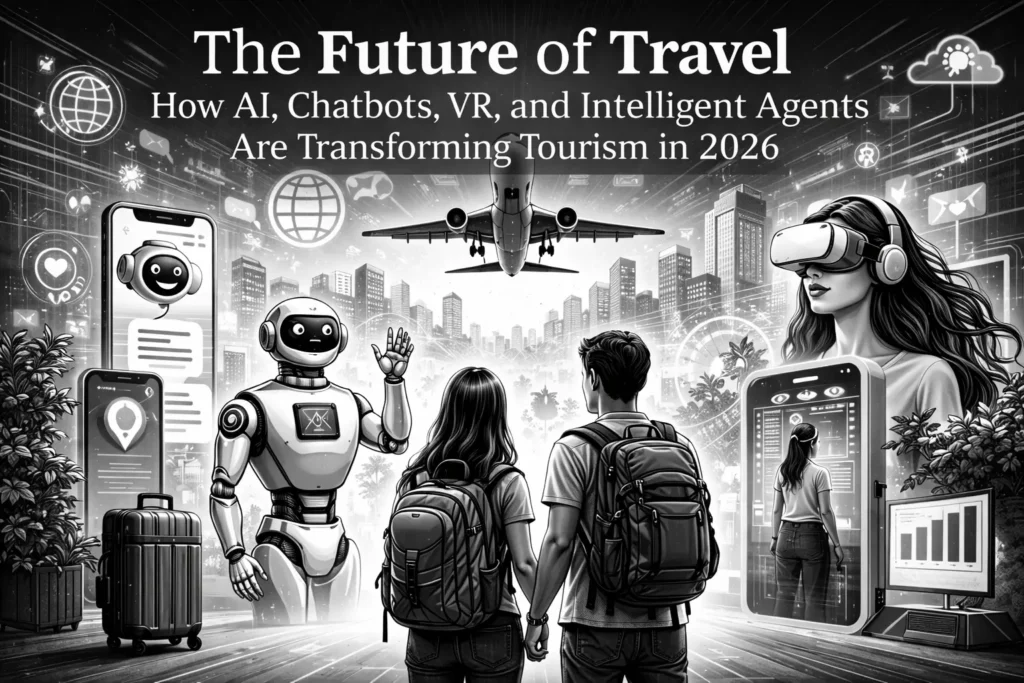
1. AI Agents Redefining the Travel Experience
AI agents represent a major leap beyond traditional chatbots. Rather than answering simple queries, these intelligent systems operate autonomously across platforms, continuously monitoring traveler preferences, real-time conditions, and operational data.
Modern AI agents can adjust itineraries automatically when flights are delayed, recommend alternative routes during disruptions, or proactively notify travelers about weather risks. Leading platforms such as Booking.com, Google, and Expedia are already embedding AI copilots into their services to personalize trips end to end.
Airports are also adopting agentic systems. At Heathrow Airport, AI-powered assistants accessible via messaging apps can resolve the majority of passenger inquiries without human involvement. This shift not only improves customer satisfaction but also significantly reduces operational costs.
2. Smart Automation in Hotels and Hospitality
In 2026, automation has become largely invisible to guests but more powerful than ever behind the scenes. Hotels increasingly rely on AI-driven systems to manage energy consumption, staffing, housekeeping, and maintenance.
Global hospitality leaders like Marriott use predictive analytics to anticipate guest needs and optimize room readiness, while Accor has introduced smart rooms that adapt lighting, temperature, and entertainment settings based on individual preferences.
Robotics is also gaining traction. From autonomous room service delivery to fully automated hotels in Japan, hospitality automation is improving efficiency while delivering novelty-driven guest experiences.
3. Virtual and Augmented Reality in Travel Planning
Virtual Reality (VR) and Augmented Reality (AR) are transforming how travelers research and choose destinations. Instead of static photos, users can now explore immersive, 3D representations of hotel rooms, cruise cabins, landmarks, and even entire cities.
Travel platforms like Expedia and Booking.com have integrated virtual walkthroughs that reduce booking uncertainty and increase conversion rates. Meanwhile, destinations are building digital twins that allow visitors to preview experiences before arrival and remain engaged after their trip ends.
These technologies not only enhance decision-making but also extend the travel experience into the digital realm.
4. Marketing and Discovery in the Generative AI Era
Generative AI tools such as ChatGPT have rapidly become essential travel companions. Travelers now rely on AI for itinerary planning, language translation, navigation, and local recommendations.
As a result, traditional digital marketing strategies based on search engine rankings and social media ads are losing dominance. In 2026, travel brands are focusing on AI visibility ensuring their services are accurately represented when travelers ask AI tools for personalized suggestions.
This shift is forcing tourism marketers to rethink content strategy, data partnerships, and brand discoverability in an AI-first world.
5. Sustainable Travel Powered by Intelligent Technology
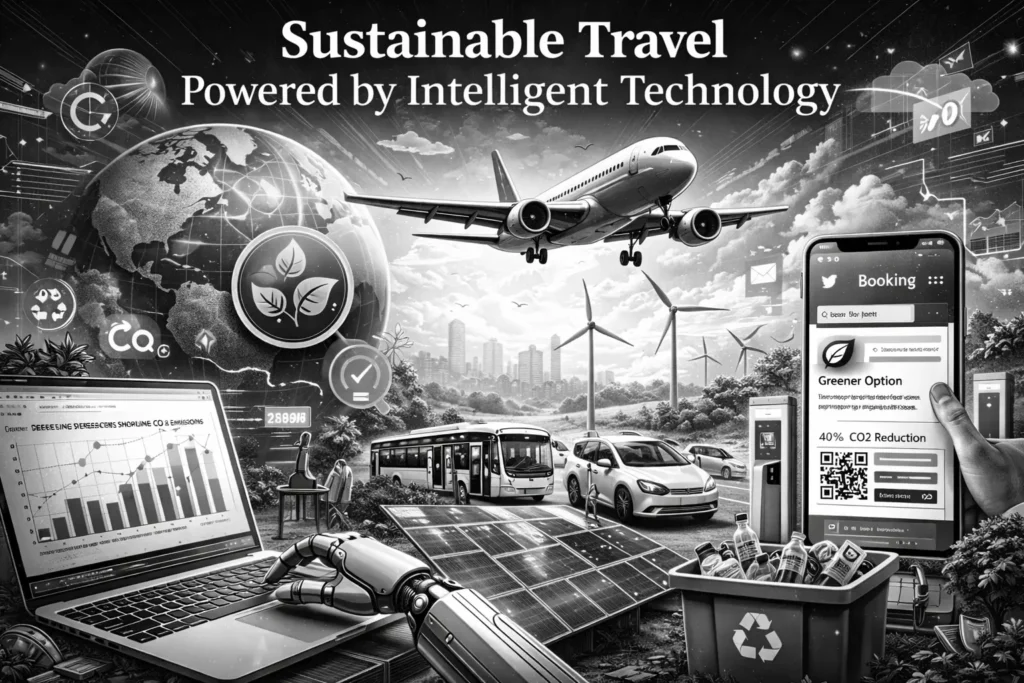
Sustainability has become a defining priority for the travel industry, and AI is playing a central role in balancing growth with environmental responsibility.
Major booking platforms now display emissions data, enabling travelers to choose lower-impact options. Airlines use AI to optimize flight paths and reduce contrails, which significantly contribute to climate warming. Hotels deploy smart energy systems and AI-powered waste management tools to cut food waste and reduce resource consumption.
Large-scale developments such as Universal Beijing Resort demonstrate how renewable energy and smart infrastructure can support sustainable tourism at scale. Regulatory frameworks like the EU Corporate Sustainability Reporting Directive further accelerate adoption of green technologies across the sector.
6. Biometrics Beyond Airports
Biometric technology is no longer limited to border control. In 2026, facial recognition and fingerprint authentication are increasingly used for hotel check-in, room access, and cashless payments.
Hospitality brands such as CitizenM, Yotel, Marriott, and Accor are piloting biometric systems to eliminate friction, reduce plastic keycard waste, and enhance security.
As biometric infrastructure expands globally, travelers increasingly rely on their biological identity as a universal access credential throughout their journey.
Final Thoughts: The Road Ahead for Travel and Hospitality
By 2026, it is clear that travel and hospitality have entered a new era defined by intelligent, data-driven technology. AI agents, automation, immersive experiences, sustainability tools, and biometrics are not futuristic concepts they are operational realities.
The organizations that succeed will be those that use technology to remove friction, personalize experiences, and operate responsibly. Those that resist change risk becoming invisible in a world where travelers increasingly rely on AI to make decisions for them.
The future of travel is smarter, more immersive, and more human-centered than ever before.
FAQs
1. How is AI changing the travel industry in 2026?
AI is transforming travel through personalized planning, automated customer support, predictive operations, and sustainability optimization across airlines, hotels, and destinations.
2. What are AI agents in travel and hospitality?
AI agents are autonomous systems that manage end-to-end travel experiences, proactively responding to disruptions, preferences, and real-time data without constant human input.
3. How does virtual reality impact travel bookings?
VR allows travelers to explore destinations and accommodations before booking, increasing confidence, engagement, and conversion rates.
4. Is biometric technology safe for travelers?
Biometric systems improve security and convenience, but successful adoption depends on strong data protection policies and regulatory compliance.
5. Can AI support sustainable tourism?
Yes. AI helps reduce emissions, minimize waste, optimize energy usage, and empower travelers to make environmentally responsible choices.