Introduction: The New Frontier of Emotional Connection
In an era dominated by technology, automation, and constant digital noise, emotional connection has become the currency of loyalty. Brands that truly stand out are those that connect with their audience on a deeper sensory level, appealing not only to the eyes and ears but to the entire emotional spectrum of human experience. This is where the concept of a sensory branding strategy emerges, a structured approach to engage multiple senses to build lasting emotional connections that go beyond product features or catchy slogans. Through this strategy, companies can shape how customers feel, remember, and relate to their brand in ways traditional marketing simply cannot achieve. From the touch of a sleek package to the scent of a retail store or the sound that plays when an app launches, every detail matters in creating a complete brand experience that resonates emotionally.
The future of branding belongs to those who understand the importance of emotional design. As businesses evolve through digital transformation leadership, tech leadership strategies, and global business transformation, they realize that emotional connection is not optional, it’s a competitive advantage. Sensory branding bridges the human and digital worlds, ensuring technology-driven experiences still feel authentic, personal, and emotionally satisfying. It’s not about manipulation, it’s about creating real value through how people feel when they engage with your brand.
1. What Is a Sensory Branding Strategy?
A sensory branding strategy is an intentional plan that integrates all five human senses, sight, sound, touch, taste, and smell, to influence customer perceptions and emotional responses. Instead of focusing only on visual identity, it builds a comprehensive experience that reflects brand personality across multiple touchpoints. From retail design to digital experiences, this approach creates cohesive emotional storytelling. Brands such as Starbucks, Apple, and Tesla have perfected this approach, turning every sensory cue into part of their identity. Their stores, sounds, lighting, and even materials create a feeling of belonging, comfort, and aspiration, one that customers associate exclusively with their brand.
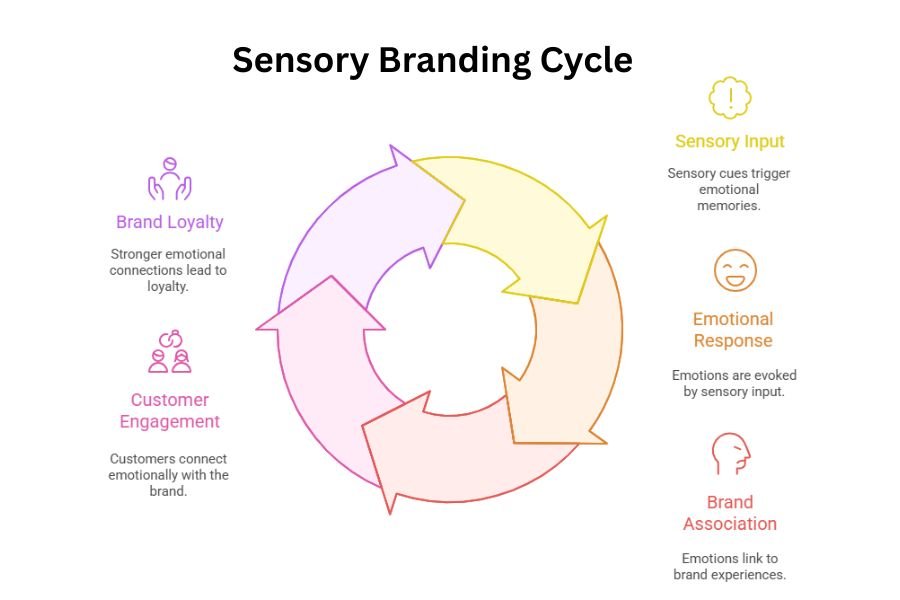
In the age of emerging tech trends 2025, the sensory branding strategy is expanding into virtual and augmented reality spaces, where sound, sight, and motion come together in immersive ways. Businesses that master sensory cues in both digital and physical settings will dominate the future of emotional branding. When applied with creativity and consistency, this strategy transforms how customers experience products and how they remember them. It allows brands to move beyond transactions and foster emotional loyalty, an outcome that drives repeat engagement and long-term trust.
2. The Psychology of Sensory Perception
Human emotions are deeply influenced by sensory input. Studies show that sensory cues can trigger emotional memories and subconscious feelings faster than rational thought. This is why a sensory branding strategy works so powerfully, it taps into the way our brains associate experiences with sensations. For instance, the scent of vanilla might evoke comfort and nostalgia, while certain colors can create feelings of excitement or calm. Understanding how sensory triggers influence mood is essential to designing brand experiences that elicit the desired emotional reactions.
For leaders focused on digital innovation insights and technology for social impact, understanding sensory psychology isn’t just about aesthetics, it’s about empathy. By aligning sensory experiences with customer needs and emotions, businesses can create inclusive and emotionally intelligent experiences. When customers feel emotionally understood, they connect more deeply and remember your brand more vividly, leading to higher engagement and stronger loyalty.
3. Visual Identity and Emotional Impact
Sight remains the most dominant sense in brand perception, and visual cues form the foundation of any sensory branding strategy. Colors, typography, imagery, and design layout all convey emotion long before a word is spoken. A brand’s choice of colors alone can determine whether customers perceive it as trustworthy, energetic, or luxurious. Think of Apple’s clean, minimalist aesthetic, its design language communicates simplicity, innovation, and elegance. Every visual element reinforces its positioning as a leader in future of work technology and design excellence.
However, visual identity must go beyond aesthetics; it must tell a story. Businesses aiming for cross-border business expansion must ensure that their visual language resonates globally while maintaining cultural sensitivity. A consistent visual system across digital and physical channels builds recognition and reinforces trust. When executed well, it becomes an emotional anchor for the rest of the sensory experience, ensuring customers feel a strong sense of connection at every touchpoint.
4. The Power of Sound and Sonic Branding
Sound is one of the most overlooked yet powerful tools in a sensory branding strategy. From the subtle sound your phone makes when it powers on to the ambient music in a hotel lobby, sound shapes mood, pace, and memory. Research shows that certain rhythms and tones can increase customer engagement, improve mood, and enhance brand recall. Sonic branding, creating a unique, recognizable sound identity, has become as important as a visual logo. Netflix’s “ta-dum” or Intel’s four-note chime are perfect examples of how sound can instantly trigger brand association.
For brands pursuing tech leadership strategies and innovation-driven growth, integrating sound into the user journey enhances emotional connection. From podcasts and videos to digital interfaces, sound provides an invisible layer of experience that shapes perception. It creates rhythm, emotion, and familiarity, helping users navigate and connect with the brand intuitively. When combined with visual and tactile elements, sound amplifies emotional resonance and makes the overall brand experience feel complete.
5. The Scent Experience: Memory and Emotion
Scent is uniquely tied to memory and emotion, often bypassing rational thought to trigger subconscious feelings. A sensory branding strategy that incorporates scent can leave a lasting impression far beyond the immediate experience. For example, luxury hotels use signature scents to create consistency across global locations, making guests feel instantly “at home.” Similarly, retailers use fragrances to evoke warmth, relaxation, or excitement, influencing mood and even purchase behavior.
From a sustainability standpoint, integrating scent aligns with sustainable technology practices, using eco-friendly fragrance systems and materials that support environmental responsibility. In a global context, brands must consider cultural differences in scent preferences to ensure inclusivity and appeal. The right fragrance can transform an environment, elevate emotional connection, and enhance a brand’s sensory signature, creating feelings customers remember long after they’ve left the space.
6. Touch and Texture in Brand Experience
Touch completes the sensory equation. In physical products, packaging, and retail environments, texture conveys quality and authenticity. A sensory branding strategy that prioritizes touch ensures that customers experience tactile satisfaction that matches the brand promise. Soft, matte finishes suggest luxury, while rough textures imply craftsmanship or durability. These details communicate meaning without words and influence customer perception at a subconscious level.
In a world increasingly defined by digital experiences, brands are finding creative ways to replicate tactile sensation online through immersive visuals and interactive design. This innovation reflects the direction of emerging tech trends 2025, where haptic feedback and virtual textures are redefining how customers engage through devices. By understanding how touch translates into digital form, brands can preserve emotional warmth even in virtual environments, bridging the gap between technology and humanity.
7. Taste as a Brand Differentiator
Taste is the most direct sensory experience, but its influence extends far beyond food and beverages. A sensory branding strategy that uses taste effectively connects emotion to brand identity in powerful ways. Think of Coca-Cola’s unmistakable flavor, it’s not just a drink; it’s nostalgia, happiness, and shared moments in a bottle. Similarly, hospitality and wellness brands use taste to complement their identity, offering signature teas, chocolates, or snacks that reflect their values and enhance the customer journey.
Taste-driven branding also supports startup growth strategies by helping new companies differentiate through sensory storytelling. Offering unique, memorable flavors or collaborations with local producers can establish authenticity and emotional depth. In an increasingly competitive landscape, taste-driven experiences add personality and help brands carve a distinctive space in the customer’s memory.
8. Integrating Technology into Sensory Branding
The digital era demands that sensory branding evolve with technology. Modern tools such as virtual reality (VR), augmented reality (AR), and artificial intelligence (AI) allow brands to simulate sensory experiences beyond physical limits. AI-powered personalization can adapt sound, visuals, and even virtual scents to individual preferences. This aligns with AI leadership skills and digital innovation insights, helping companies design emotionally intelligent digital ecosystems.
For future-ready business leaders, integrating technology into sensory branding bridges physical and digital realities. It enables scalable, personalized, and measurable brand experiences that resonate emotionally across platforms. By merging emotional design with technological precision, brands create environments where innovation feels human-centered and emotionally rich.
9. Cultural Sensitivity and Global Adaptation
A global sensory branding strategy must be adaptable across diverse cultures. Colors, scents, and sounds have different meanings worldwide; what feels comforting in one region might seem aggressive in another. Brands expanding internationally must research and localize sensory cues to maintain emotional relevance while preserving brand consistency. Cultural intelligence becomes a key part of cross-border business expansion and global branding success.
Cultural adaptation is also an opportunity for inclusivity. Through inclusive technology innovation, brands can embrace diverse sensory preferences, celebrating difference rather than standardizing it. By respecting cultural nuances, businesses create more authentic emotional connections and show customers they are seen, understood, and valued, fostering deep and lasting brand loyalty.
10. Emotional Branding and Long-Term Loyalty
Emotion drives decision-making far more than logic does. Customers may forget advertisements, but they never forget how a brand made them feel. A sensory branding strategy focuses on emotional memory, creating experiences that evoke happiness, comfort, pride, or excitement. Over time, these emotions become intertwined with brand identity, influencing long-term loyalty and advocacy.
Brands that invest in emotional storytelling through sensory cues see stronger customer retention and higher engagement rates. This emotional alignment supports building innovation culture, encouraging internal teams to think empathetically about customer experiences. It turns every interaction into an opportunity to strengthen relationships, fostering loyalty rooted in genuine emotional value.
11. Sustainability and Ethical Sensory Branding
In today’s conscious marketplace, consumers value sustainability as much as sensory appeal. Ethical design choices, sustainable materials, and environmentally friendly production all contribute to positive emotional association. A sensory branding strategy rooted in ethics supports sustainable technology practices and appeals to the growing demographic of eco-conscious consumers. Sustainability itself becomes part of the emotional experience.
Brands that align their sensory identity with sustainability show leadership and responsibility. Whether through biodegradable packaging, low-energy lighting, or natural fragrances, sustainable sensory design deepens trust and respect. Customers connect emotionally with brands that reflect their values, turning responsible design into a powerful differentiator.
12. Leadership and Mentorship in Sensory Branding
Behind every effective sensory brand is visionary leadership that understands emotion as a business tool. Executives who invest in sensory design demonstrate digital transformation leadership by merging creative thinking with strategic insight. They recognize that emotional connection fuels loyalty, advocacy, and brand differentiation.
At the same time, nurturing mentorship for entrepreneurs ensures future leaders understand the importance of sensory-driven branding. Through mentorship programs, established professionals can guide startups in developing emotionally intelligent strategies that align innovation with empathy. This leadership mindset will shape the next generation of brands, ones built not just on technology but on human connection.
13. Measuring the Impact of Sensory Branding
To validate success, businesses must measure how their sensory initiatives influence perception, engagement, and loyalty. Surveys, customer feedback, and emotional analytics tools can assess emotional response. By analyzing sensory touchpoints, brands can identify which cues create the strongest emotional bonds. A sensory branding strategy that integrates data-driven insights ensures creative efforts are both impactful and measurable.
For global business transformation, this blend of art and analytics is essential. Emotional data allows leaders to refine strategies and make evidence-based improvements. Over time, brands that listen to emotional feedback build trust, authenticity, and relevance in a constantly evolving marketplace.
14. Implementing a Holistic Sensory Experience
The final step is integration. Every sensory cue, sight, sound, touch, taste, and smell, must work in harmony. Consistency is key: from digital interfaces to physical spaces, every detail should reinforce the same emotional message. A successful sensory branding strategy unites design, storytelling, and innovation into a single cohesive experience that makes customers feel recognized and inspired.
Holistic sensory branding also prepares businesses for future-ready leadership. By understanding how technology and emotion intersect, brands can innovate with empathy and precision. It’s not just about aesthetics; it’s about crafting feelings, creating experiences that leave lasting emotional imprints across every interaction.
Collaborate with Mustasam Abbasi
If you’re interested in exploring how sensory branding can elevate your organization’s emotional impact, visit mustasamabbasi.com/contact to discuss collaborations, speaking engagements, or consulting opportunities. Together, we can transform how your audience experiences your brand, through strategy, empathy, and innovation.
FAQs
What is sensory branding in marketing?
Sensory branding is the process of using multiple senses, sight, sound, touch, taste, and smell, to create emotional connections with consumers. It moves beyond visuals and words, turning brand interactions into full sensory experiences that people remember.
How does sensory branding influence buying decisions?
Sensory cues trigger emotional responses, making customers feel connected, comfortable, and confident. This emotional alignment often drives purchase behavior and long-term loyalty more effectively than traditional advertising.
What industries benefit most from sensory branding?
While hospitality, retail, and food industries lead the way, every sector, from tech startups to healthcare, can use sensory branding to enhance emotional engagement and differentiate their offerings.
How can small businesses use sensory branding effectively?
Small brands can start simple, through signature colors, personalized packaging, or consistent soundscapes in digital channels. The key is consistency and authenticity, not scale.
What role does technology play in sensory branding?
Modern technology enables brands to personalize sensory experiences through AI, VR, and data analytics. These tools allow businesses to tailor emotional engagement while maintaining human-centered design principles.
Conclusion
Emotions are the foundation of loyalty, and sensory branding is the bridge that connects people to brands through feeling. By implementing a thoughtful sensory branding strategy, businesses create experiences that customers don’t just remember, they feel. This emotional bond transforms everyday interactions into meaningful relationships that stand the test of time. As Mustasam Abbasi emphasizes, the future of brand success lies in emotional intelligence, empathy, and innovation. Whether you’re leading a startup, mentoring entrepreneurs, or shaping global transformation, embracing sensory branding ensures your business remains memorable, human, and future-ready.