Remote teams don’t fail because of distance they fail because of avoidable mistakes. As remote work becomes the default operating model for startups and growing businesses, many leaders still struggle to scale distributed teams effectively. Time zones and geography are often blamed, but they are rarely the real problem. The true challenges lie in how teams are hired, managed, and supported. When remote teams fail, it is usually due to systems and leadership gaps that could have been prevented.
Organizations that treat remote work as a strategy rather than a temporary solution outperform those that improvise. Scaling remote talent requires clarity, structure, and intentional design. Without these foundations, even the most talented teams struggle to deliver consistent results. Below are the five most common reasons companies fail to scale remote talent and how to avoid them.
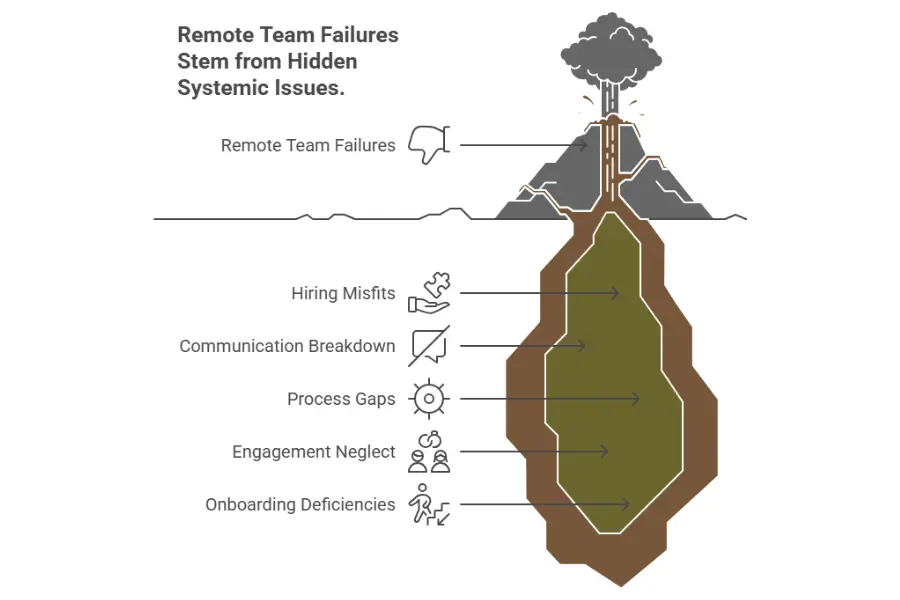
1. Hiring the Wrong Fit for Remote Roles
Hiring the wrong fit is one of the most common and costly mistakes in remote team building. Many companies prioritize technical skills while overlooking autonomy, accountability, and communication ability. This mismatch leads to missed expectations and disengagement. Remote environments amplify these weaknesses because support is not always immediate. Remote teams don’t fail because of distance they fail because of avoidable hiring mistakes.
To scale remote teams successfully, hiring processes must be redesigned for distributed work. Candidates should be evaluated on their ability to work independently, communicate clearly, and manage outcomes rather than hours. Trial tasks, structured interviews, and clear success metrics reduce risk. This approach is especially important for B2B software, SaaS development, and custom software teams. When hiring aligns with remote realities, performance and retention improve significantly.
2. Poor Communication Tools and Practices
Poor communication tools quietly undermine remote teams over time. Without the right platforms, teams struggle to stay aligned and informed. Important updates get lost, meetings increase unnecessarily, and decision-making slows down. Over time, this erodes trust and productivity. Remote teams don’t fail because of distance they fail because of avoidable communication breakdowns.
Effective remote communication requires both the right tools and clear usage rules. Platforms such as Slack, Microsoft Teams, and enterprise content management systems must support clarity, not noise. Teams should know when to communicate asynchronously and when real-time discussion is necessary. Documenting decisions and workflows ensures continuity across locations. Strong communication systems enable remote teams to scale without confusion.
3. Lack of Clear Processes and Operating Systems
A lack of clear processes creates inconsistency and operational friction in remote teams. When workflows are undocumented, employees rely on assumptions instead of structure. This leads to duplicated work, missed deadlines, and uneven quality. The problem becomes more visible as teams grow. Remote teams don’t fail because of distance they fail because of avoidable process gaps.
Clear processes provide stability and scalability. Documented workflows, defined ownership, and standard operating procedures improve accountability. This is especially critical in application development, business analytics, project management, and quality engineering. Well-designed systems reduce dependency on individuals and enable smoother onboarding. Process clarity allows leaders to focus on growth rather than daily firefighting.
4. Ignoring Team Engagement and Leadership Presence
Ignoring engagement is one of the fastest ways to lose remote talent. Distributed teams do not benefit from informal office interactions, making intentional engagement essential. When employees feel disconnected, motivation declines quietly. Productivity drops long before leaders notice a problem. Remote teams don’t fail because of distance they fail because of avoidable disengagement.
Remote engagement requires deliberate leadership and consistent communication. Regular check-ins, recognition, and feedback build trust and alignment. Leaders must focus on belief, motivation, commitment, and consistent practice. Strong leadership presence helps teams feel supported even across borders. Engaged teams are more resilient, productive, and loyal.
5. Weak Onboarding and Enablement Systems
Weak onboarding systems set remote employees up for failure from the start. Many companies underestimate how much guidance new hires need in distributed environments. Without structure, employees struggle to understand expectations and workflows. This delays productivity and increases early attrition. Remote teams don’t fail because of distance they fail because of avoidable onboarding mistakes.
Effective onboarding should be structured, repeatable, and well-documented. New hires need clear access to tools, processes, and responsibilities from day one. Strong onboarding accelerates time-to-value and builds confidence. This is especially important for SaaS development, custom software development, and global delivery teams. Scalable onboarding systems are a growth enabler.
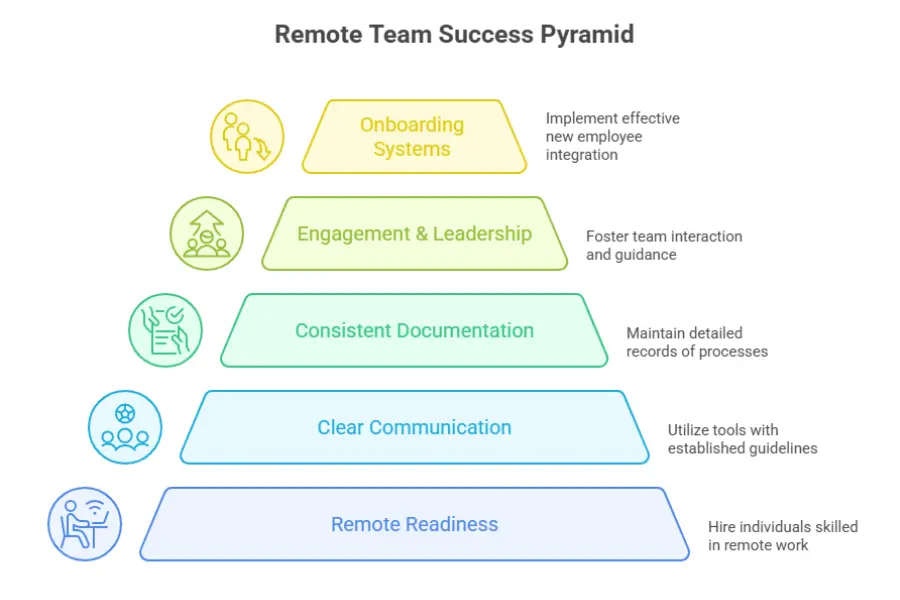
Key Takeaways: How to Scale Remote Teams Successfully
To avoid these common pitfalls, organizations should focus on the fundamentals:
- Hire for remote readiness, not just technical expertise
- Use clear communication tools with defined rules
- Document processes and workflows consistently
- Invest in engagement and leadership presence
- Build strong onboarding and enablement systems
Remote teams don’t fail because of distance — they fail because of avoidable mistakes. Fixing these issues transforms remote work into a competitive advantage.
Build Remote Teams That Truly Scale
With over 20 years of experience in business development, strategy, operations, and technology-led transformation, Mustasam Abbasi helps startups and organizations build scalable, high-performing remote teams. His expertise spans B2B software and services, SaaS development, application development, quality engineering, startup advisory, vehicle launch, and management consulting.
Designing high-performing remote teams requires more than just tools and talent it demands the right systems, leadership approach, and execution strategy. Organizations looking to strengthen remote hiring, communication, onboarding, and delivery can reach out to Mustasam Abbasi for advisory, consulting, and leadership support tailored to modern, distributed teams.
👉 Visit mustasamabbasi.com to explore how he can help your remote workforce scale effectively.
Final Thoughts
Remote teams don’t fail because of distance they fail because of avoidable mistakes. Geography is no longer the barrier; poor systems and unclear leadership are. Organizations that design intentionally for remote work gain a lasting advantage.
With the right hiring approach, communication tools, processes, and leadership mindset, remote teams become scalable, resilient, and highly effective. The future of work belongs to those who build it deliberately.
FAQs
Why do remote teams fail even with skilled professionals?
Because skills alone do not replace structure, communication, and leadership. Remote teams don’t fail because of distance they fail because of avoidable mistakes.
What industries benefit most from remote teams?
B2B software, SaaS, application development, analytics, and consulting benefit significantly when remote systems are designed properly.
How important is onboarding for remote teams?
Onboarding is critical. Weak onboarding slows productivity and increases early turnover in remote environments.
Can startups scale faster with remote teams?
Yes. With clear processes, communication, and leadership, remote teams scale faster and access global talent.
What is the first step to fixing remote team issues?
Audit hiring, communication, and onboarding systems. Most problems originate there.