Introduction: Redefining the Future with AI and Job Creation
Artificial Intelligence (AI) is no longer a futuristic concept; it has become a defining factor in how the world’s most successful organizations evolve, compete, and grow. The integration of AI is transforming every dimension of business, from customer engagement and decision-making to workforce productivity and innovation pipelines. Yet, contrary to widespread misconceptions, AI is not primarily about replacing people.
True power of AI lies in job creation. Organizations that embrace AI responsibly are not only gaining competitive advantages but also redefining work itself. By blending human creativity with machine precision, these companies are establishing new models of productivity, leadership, and innovation. Smart companies understand that technology is a means to elevate people, not replace them. They are designing systems that foster inclusion, efficiency, and sustainable progress, ultimately proving that when AI is used wisely, it can become the strongest engine for job creation.
1. Building the Foundation: Why Smart Companies Invest in AI Early
Forward-thinking enterprises recognize that the journey toward intelligent automation begins with a strong strategic foundation. Early adoption of AI provides the agility and data-driven decision-making power needed to compete in increasingly digital markets. These organizations don’t see AI as a standalone project; they see it as an integrated layer of transformation that strengthens their entire ecosystem, from operations and supply chains to customer experiences. This approach allows businesses to pivot faster, respond to market changes effectively, and empower employees to focus on higher-value work. Smart leaders use tech leadership strategies to ensure their AI investments align with both business goals and ethical considerations. The outcome is not workforce reduction, but rather job creation, as employees are reskilled to manage, interpret, and enhance AI systems that elevate performance and innovation.
2. Reimagining the Workforce: How AI Enhances Human Potential
AI’s role in the workplace isn’t to replace humans, it’s to amplify their capabilities. When repetitive, data-heavy tasks are automated, employees gain the freedom to focus on creative problem-solving, relationship building, and strategy development. This evolution has redefined the concept of work and unlocked new career paths in data science, automation management, and digital ethics oversight. Leaders who embrace digital innovation insights understand that people remain the ultimate competitive advantage. AI enhances human performance by acting as a co-pilot, an intelligent assistant that improves accuracy, efficiency, and foresight. Companies that prioritize upskilling initiatives create environments where innovation thrives, resulting in both higher productivity and long-term job creation across industries.
3. Job Creation Through Intelligent Automation
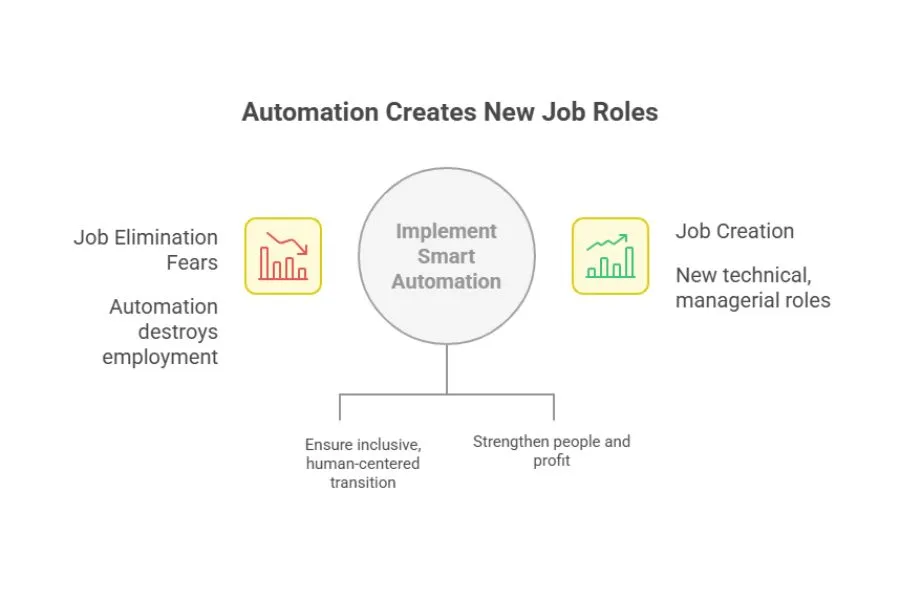
Contrary to the misconception that automation destroys employment, the reality is that it changes the nature of work. Smart automation leads to more complex, valuable roles that require critical thinking and emotional intelligence, areas where humans excel. The result is a redistribution of opportunities rather than their elimination. AI-driven industries like healthcare, manufacturing, and logistics are already witnessing significant job creation as new technical, managerial, and support roles emerge. Companies that adopt AI leadership skills ensure this transition is inclusive and human-centered, aligning automation strategies with workforce development programs that strengthen both people and profit.
4. Tech Leadership Strategies for Sustainable AI Integration
True AI transformation requires visionary leadership that balances technological innovation with human-centered design. Successful executives understand that integrating AI sustainably demands collaboration across departments. IT, HR, strategy, and ethics. They don’t chase every emerging technology; they implement AI solutions that serve the company’s broader mission. By fostering digital transformation leadership, organizations can maintain transparency, accountability, and trust, qualities essential for employee engagement. This leadership model encourages continuous learning, adaptive thinking, and inclusive innovation, ensuring that AI adoption contributes directly to job creation rather than job displacement.
5. Digital Innovation Insights: Turning Data into Growth
Data is the fuel of the modern economy, and AI is the engine that transforms it into action. Through predictive analytics, intelligent process automation, and machine learning models, companies gain real-time insights that improve efficiency and profitability. But beyond performance metrics, these systems create new avenues for innovation and entrepreneurship. Executives who use digital innovation insights are turning data into a strategic advantage, identifying untapped market segments and optimizing operations. This shift generates opportunities for new business models and roles in analytics, AI governance, and ethical data management, all contributing to meaningful job creation in a rapidly evolving digital world.
6. Building Innovation Culture Around AI
Culture is at the heart of every successful AI-driven transformation. A strong building innovation culture framework encourages experimentation, continuous learning, and cross-functional collaboration. Companies that cultivate this mindset make AI adoption a shared mission rather than a top-down directive. By engaging employees in innovation programs, hackathons, and collaborative problem-solving, organizations inspire ownership and curiosity. This inclusive model nurtures creativity and resilience, ensuring that technological change leads to long-term job creation and employee satisfaction. When innovation becomes part of the company’s DNA, AI evolves from a tool into a shared language of progress.
7. AI Leadership Skills: Empowering Teams to Excel
Leading in the era of AI requires a unique combination of technical literacy, emotional intelligence, and ethical awareness. AI leadership skills go beyond understanding algorithms, they encompass guiding people through change, fostering psychological safety, and inspiring innovation. The best leaders bridge the gap between technology and humanity, ensuring both grow in harmony. Organizations that invest in developing AI-capable leaders experience smoother digital transitions, higher engagement, and greater adaptability. These leaders become catalysts for job creation, helping their teams thrive in hybrid environments where human judgment and AI intelligence complement each other perfectly.
8. Emerging Tech Trends 2025 and the Future of Work
The coming years will bring advancements in generative AI, quantum computing, and autonomous systems, technologies that will redefine industries and careers alike. Emerging tech trends 2025 point toward a future where collaboration between human workers and intelligent systems becomes seamless and intuitive. Companies that anticipate these changes will unlock opportunities in sectors ranging from cybersecurity and sustainability to design and education. This evolution will spark large-scale job creation, as new professions emerge around ethical AI use, machine-human interfaces, and advanced data analytics. The future of work will belong to businesses that see technology as a partner, not a competitor.
9. Inclusive Technology Innovation for Equitable Growth
AI must be inclusive to be transformative. Inclusive technology innovation ensures that automation benefits people across geographies, demographics, and industries. When diversity is embedded in design, companies produce solutions that are fairer, more adaptable, and socially responsible. Inclusion drives innovation by bringing different perspectives into problem-solving processes. It also contributes to job creation by opening up new markets and encouraging localized talent development. Smart companies recognize that equitable access to technology is both an ethical responsibility and a growth opportunity.
10. Sustainable Technology Practices for Responsible AI
As AI becomes more prevalent, sustainability must guide its implementation. Sustainable technology practices involve minimizing environmental impact while maximizing long-term value. From energy-efficient data centers to green computing models, responsible innovation ensures technology contributes positively to society. Companies that align AI with environmental and social goals are leading examples of how digital transformation can coexist with planetary well-being. This synergy not only enhances brand trust but also encourages job creation in renewable energy, green tech, and circular economy sectors, all vital components of a future-ready economy.
11. Global Business Transformation Through AI Adoption
Global enterprises are using AI to reimagine supply chains, customer experiences, and operational agility. This global business transformation fosters collaboration across borders, enabling companies to scale intelligently while adapting to regional market dynamics. AI enhances cross-border data management, risk analysis, and product innovation. These advancements open doors to international job creation, as companies expand their digital footprint and build localized AI ecosystems supported by regional talent and knowledge-sharing partnerships.
12. Technology for Social Impact: Beyond Profitability
Smart organizations understand that technology’s greatest legacy lies in its social impact. Technology for social impact initiatives powered by AI address challenges in healthcare, education, and sustainability, creating measurable benefits for communities worldwide. These innovations don’t just improve lives, they also drive economic growth through new opportunities in public-private partnerships and nonprofit innovation hubs. As organizations align AI projects with social objectives, they contribute to meaningful job creation that uplifts individuals and strengthens communities globally.
13. Mentorship for Entrepreneurs in the AI Age
Entrepreneurial mentorship has become a crucial factor in shaping the AI ecosystem. Experienced leaders who share mentorship for entrepreneurs insights help emerging innovators navigate the complexities of data ethics, business scaling, and global collaboration. This exchange of knowledge accelerates responsible innovation and empowers startups to contribute to job creation. By fostering mentorship-driven networks, the business community can build a foundation for sustainable growth and collective progress in the age of intelligent automation.
14. Future-Ready Business Leaders: The Path Ahead
The leaders of tomorrow will be those who master adaptability, empathy, and foresight. Future-ready business leaders understand that the future of work is hybrid, combining the best of human intuition with AI-powered intelligence. Their focus is not just on profit, but on purpose, inclusivity, and continuous learning. These leaders view job creation as both a moral and strategic imperative. By aligning AI investments with workforce development, they ensure that technological progress benefits society as a whole. The future belongs to organizations that see human potential as the greatest asset in the AI revolution.
Collaboration and Consulting: Partner with Mustasam Abbasi
If your organization is ready to embrace responsible AI adoption, build innovation culture, or explore strategies for sustainable digital growth, visit mustasamabbasi.com/contact. Mustasam Abbasi collaborates with leaders, educators, and entrepreneurs worldwide to drive transformative change through technology and leadership excellence.
FAQs
1. How does AI contribute to job creation in modern industries?
AI automates repetitive tasks while opening new roles in development, management, and ethics. This shift leads to more skilled employment opportunities across sectors.
2. What industries benefit most from AI-driven job creation?
Sectors like healthcare, education, finance, manufacturing, and renewable energy see major gains, as AI enables efficiency, innovation, and entirely new business models.
3. How can leaders prepare their teams for AI integration?
Through upskilling, transparent communication, and tech leadership strategies that emphasize collaboration between humans and intelligent systems.
4. Is AI adoption sustainable and ethical?
Yes, when guided by sustainable technology practices and ethical frameworks, AI can minimize bias, reduce waste, and promote long-term economic resilience.
5. What role does mentorship play in AI innovation?
Mentorship for entrepreneurs fosters responsible experimentation, accelerates learning, and ensures that innovation aligns with real-world needs and values.
Conclusion: Shaping a Human-Centered AI Future
Artificial Intelligence is transforming industries, economies, and societies—but its greatest power lies in how it enhances human potential. The smartest companies don’t view AI as a replacement strategy; they see it as a platform for growth, innovation, and job creation. Mustasam Abbasi’s vision aligns with this belief: that AI, guided by ethical leadership and strategic foresight, can drive inclusive prosperity. By blending intelligence, empathy, and innovation, organizations can not only succeed in a digital world but lead it—turning technology into a tool for empowerment, sustainability, and shared progress