The Moment That Changed Education Forever
Generative AI in education 2026 is no longer a distant concept it is actively transforming how students learn, how institutions operate, and how leaders make decisions in real time. What started as a technological breakthrough has quickly evolved into a systemic shift that is challenging traditional education models across the globe. From AI-powered classrooms to student-led innovation, the rules of learning are being rewritten faster than institutions can adapt. Leaders who ignore this shift risk falling behind in relevance, student engagement, and workforce alignment. The question is no longer whether AI will impact education, but how quickly institutions can respond to it.
The rise of generative AI tools has exposed deep inefficiencies in legacy education systems that were built for a different era. Rigid lectures, outdated curricula, and standardized testing frameworks are struggling to meet the expectations of modern learners. Students are now leveraging AI to personalize learning, accelerate projects, and explore entrepreneurial ideas beyond classroom boundaries. This transformation is creating both disruption and opportunity for institutions worldwide. As someone who has led global innovation initiatives and contributed to advanced digital platforms, I have seen firsthand how technology reshapes entire ecosystems. Education is now at that same inflection point.
AI Didn’t Break Education—It Exposed Its Limits
The rapid adoption of generative AI in education has revealed long-standing gaps between academic systems and real-world demands. Institutions were already facing challenges such as outdated teaching methodologies and limited alignment with industry skills. AI simply accelerated the exposure of these weaknesses by empowering students with tools that bypass traditional learning barriers. Instead of relying solely on lectures, students are now exploring interactive, AI-driven learning experiences. This shift is forcing educators to rethink how knowledge is delivered and assessed.
From my experience working across multiple countries and strategic projects, transformation does not occur because of technology alone it happens when systems are forced to evolve. Educational institutions are now being pushed to rethink their core purpose in a world where information is instantly accessible. The focus is shifting from memorization to
Students Are Leading the AI Revolution
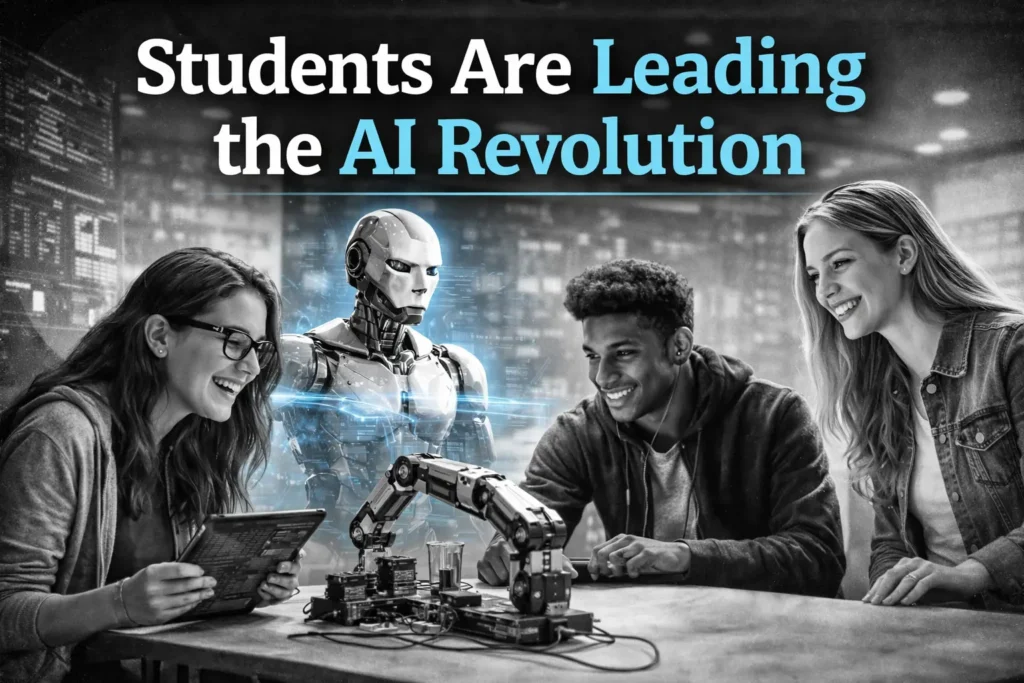
Today’s students are not passive learners they are active creators in the AI-driven education ecosystem. They are using generative AI tools to build projects, launch startups, and experiment with real-world applications beyond academic requirements. This shift marks a transition from traditional education pathways to dynamic, self-directed learning journeys. Students are no longer waiting for permission to innovate; they are creating their own opportunities. This behavior signals a fundamental change in how education is perceived and consumed.
In my work mentoring startups and supporting innovation ecosystems, I have observed that the most impactful ideas often emerge from individuals who challenge existing systems. Students today embody this mindset by leveraging AI to accelerate their learning and execution capabilities. While concerns around academic integrity exist, they also highlight the need for more relevant and adaptive assessment models. Institutions must recognize that this is not a problem to suppress but a signal to evolve. By supporting student innovation, universities can become hubs of entrepreneurship and technological advancement. This approach aligns education with real-world impact and economic growth.
The Rise of Intrapreneurship in Education
Innovation within educational institutions is increasingly being driven from the ground up rather than top-down leadership. Faculty members, advisors, and staff are experimenting with AI tools to improve teaching methods, streamline workflows, and enhance student experiences. These internal innovators, often referred to as intrapreneurs, are playing a critical role in driving meaningful change. They are not waiting for policies to be finalized—they are actively shaping the future of education. This grassroots innovation is where true transformation begins.
Having led multidisciplinary initiatives and strategic projects globally, I understand the importance of empowering individuals within organizations to innovate. When institutions create an environment that encourages experimentation, they unlock the full potential of their teams. In education, this means enabling faculty to redesign courses, integrate AI into curricula, and explore new teaching methodologies. Leadership must focus on removing barriers rather than controlling innovation. By aligning governance with innovation, institutions can scale successful initiatives more effectively. This approach ensures sustainable transformation across the education ecosystem.
What Education Leaders Must Do Now
To stay competitive in the evolving landscape of generative AI in education 2026, leaders must take proactive steps to adapt and innovate. The most successful institutions are not those with perfect strategies but those willing to act quickly and learn continuously. Change is inevitable, and resisting it will only widen the gap between institutions and modern learners. Leaders must embrace a mindset of experimentation, collaboration, and continuous improvement. This shift requires both strategic vision and operational agility.
Key Actions for Education Leaders:
- Adopt AI-driven learning models to enhance personalization and student engagement
- Encourage intrapreneurship among faculty and administrative teams
- Support student entrepreneurship through AI-powered innovation labs and incubators
- Redesign assessment frameworks to prioritize skills, creativity, and critical thinking
- Invest in AI training programs for educators, leaders, and institutional staff
Experience across global innovation initiatives and social impact programs shows that transformation succeeds when people, culture, and strategy are aligned. Education leaders must focus on building systems that evolve alongside rapid technological advancements. This includes fostering collaboration between students, educators, and industry partners to drive meaningful outcomes. By doing so, institutions can create a more resilient and future-ready education ecosystem. The goal is not just to adapt to AI but to leverage it as a catalyst for innovation, inclusion, and long-term growth.
The Future of Learning Is Being Built Today
The next decade of education will be defined by institutions that embrace change and empower innovation at every level. Generative AI is not the end of traditional education—it is the beginning of a more dynamic, personalized, and scalable learning paradigm. Leaders must recognize that transformation is already underway and act with urgency and clarity. The ability to adapt quickly will determine long-term success in this rapidly evolving landscape. Education systems must become more flexible, inclusive, and aligned with real-world skills and workforce demands.
A forward-looking approach to education focuses on creating solutions that drive meaningful and measurable impact. This moment presents one of the most significant opportunities to reshape how individuals learn, think, and contribute to society. Institutions that invest in AI-driven strategies today will lead tomorrow’s knowledge economy. This transformation is not just about adopting new tools but about redefining how education delivers value. The future belongs to organizations that are willing to innovate with purpose and lead with vision.
Final Thoughts: Lead the Change or Be Left Behind
Generative AI in education 2026 is a defining moment for leaders, educators, and students alike. The transformation we are witnessing is not temporary—it is a fundamental shift in how knowledge is created and shared. Institutions must move beyond reactive strategies and adopt a proactive approach to innovation. This requires bold leadership, continuous learning, and a willingness to experiment. Those who act now will shape the future of education for generations to come.
FAQs
1. What is generative AI in education?
Generative AI in education refers to advanced AI tools that can create content such as text, images, and solutions to support learning. These tools help students understand concepts faster, assist teachers in content creation, and enable personalized learning experiences. In 2026, generative AI is becoming a core part of modern education systems. It is transforming how knowledge is delivered and consumed.
2. How is generative AI transforming education in 2026?
Generative AI in education 2026 is reshaping classrooms by enabling personalized learning, automating administrative tasks, and enhancing student engagement. Students can now use AI tools to research, write, and build projects more efficiently. Educators are leveraging AI to design smarter lesson plans and assessments. This shift is making education more flexible, accessible, and aligned with real-world skills.
3. What are the benefits of using AI tools for students?
AI tools help students learn faster, improve productivity, and explore creative ideas. They provide instant feedback, simplify complex topics, and support independent learning. Students can also use AI to build projects, startups, and real-world applications. This empowers them to move beyond traditional learning methods.
4. What challenges does AI bring to education?
While generative AI offers many benefits, it also introduces challenges such as academic integrity concerns, over-reliance on technology, and data privacy issues. Institutions must develop clear policies and ethical guidelines for AI usage. Educators need to redesign assessments to focus on critical thinking rather than memorization. Addressing these challenges is essential for sustainable AI adoption.
5. How can education leaders prepare for AI transformation?
Education leaders can prepare by adopting AI-driven strategies, investing in training programs, and encouraging innovation within their institutions. Supporting faculty and student experimentation with AI is crucial. Leaders should also align technology with their institution’s mission and long-term goals. Proactive adaptation will ensure long-term success in the evolving education landscape.