Digital transformation sounds exciting until leaders are asked a simple question: where do we start? Most organisations invest heavily in technology but struggle to convert that investment into measurable business value. This gap usually exists because transformation efforts begin without a clear digital transformation roadmap. Without structure, priorities blur, budgets leak, and teams lose confidence. A roadmap turns ambition into execution by connecting strategy, technology, and people.
A digital transformation roadmap is a structured, phased plan that defines how an organisation moves from its current digital state to a future-ready operating model. It aligns business goals with technology initiatives, ensuring that every investment supports measurable outcomes. For CTOs, digital managers, and startup founders, a roadmap reduces uncertainty and accelerates decision-making. It also acts as a governance tool that keeps transformation initiatives on track. In 2026, organisations without a roadmap will increasingly fall behind competitors that execute with clarity and discipline.
What Is a Digital Transformation Roadmap — And Why Most Fail
Many organisations believe a digital transformation roadmap is simply a list of tools and platforms to implement. That misconception is one of the main reasons transformation programmes fail. A roadmap is not about software procurement; it is about sequencing change logically. When companies skip this thinking, they create technical complexity without strategic benefit. This leads to frustration, wasted investment, and stalled transformation.
In practice, a strong roadmap answers three fundamental questions that guide execution. These questions are: where the organisation is today, where it needs to go, and how it will get there with minimal disruption. Research from McKinsey shows that over 70% of transformations fail due to poor planning and lack of alignment. The technology itself is rarely the problem; the absence of a realistic roadmap is. A well-designed digital transformation strategy paired with a roadmap dramatically improves success rates.
Step 1 — Run an Honest Digital Maturity Assessment
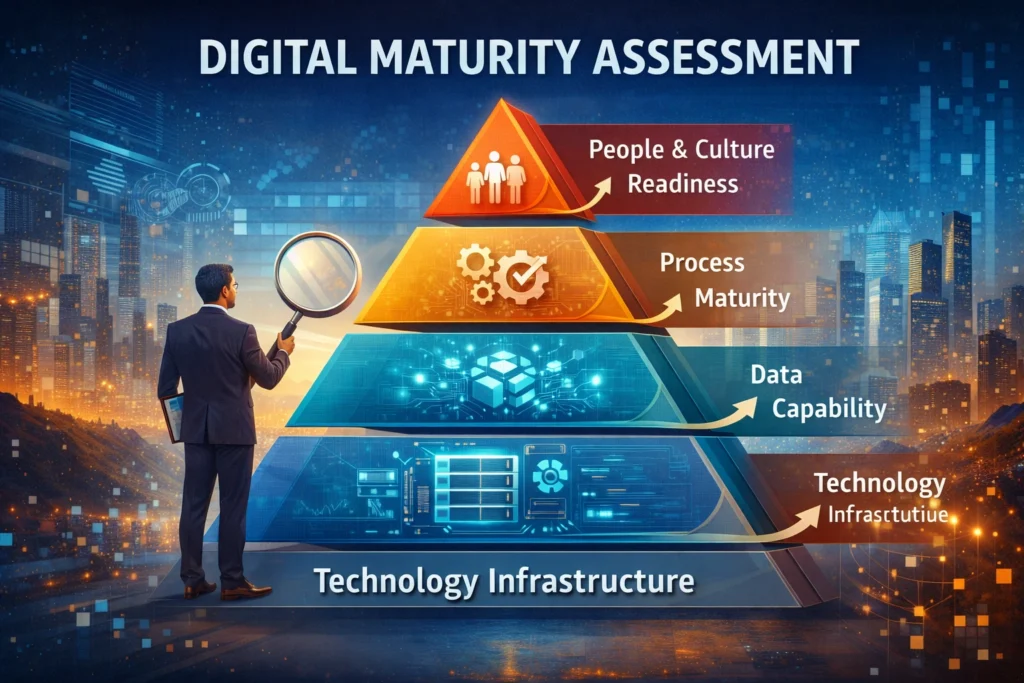
Every effective digital transformation roadmap starts with brutal honesty. Leaders often overestimate digital capability because weaknesses are uncomfortable to surface. However, skipping assessment leads to unrealistic timelines and broken expectations. A maturity assessment creates a factual baseline for decision-making. It ensures that transformation steps are grounded in reality, not assumptions.
A comprehensive assessment should evaluate four core areas:
- Technology infrastructure – age, scalability, and integration
- Data capability – accessibility, ownership, and quality
- Process maturity – standardisation and automation levels
- People and culture – skills, mindset, and leadership commitment
Understanding these dimensions helps organisations prioritise transformation steps correctly. It also prevents costly rework later in the roadmap. This step is foundational for anyone learning how to build a digital transformation roadmap effectively.
Step 2 — Define the Transformation Vision (Not a Tech Wish List)
One of the biggest traps in digital transformation strategy is confusing vision with aspiration. Phrases like “become data-driven” or “modernise IT” sound good but lack operational meaning. A strong transformation vision must be specific, measurable, and time-bound. Without this clarity, roadmaps become unfocused and difficult to execute. Vision gives purpose to every initiative that follows.
Effective transformation visions are tied directly to business outcomes rather than tools. Examples include reducing time-to-market, improving customer retention, or enabling global remote operations. Each outcome should be linked to a technology lever that enables it. This approach ensures technology serves the business, not the other way around. In 2026, organisations that define capability-driven visions will outperform those chasing trends.
Step 3 — Build the Roadmap in Three Horizons
A digital transformation roadmap should not be treated as a single linear journey. Transformation happens across overlapping time horizons that require different priorities. The three-horizon model brings structure without sacrificing flexibility. It allows organisations to stabilise operations while preparing for innovation. This approach also supports better investment planning.
| Horizon | Timeframe | Focus | Outcome |
| Stabilise | 0–6 months | Fix foundations | Operational credibility |
| Scale | 6–18 months | Platform and integration | Efficiency and growth |
| Innovate | 18–36 months | AI and automation | Market leadership |
This model prevents organisations from rushing into advanced technologies before fundamentals are ready. Horizon-based planning also supports long-term digital transformation steps without overwhelming teams. It is particularly useful for enterprises managing legacy systems. Startups can apply the same logic on a smaller, faster scale.
Step 4 — Assign Ownership at Every Level
A roadmap without accountability quickly becomes a slide deck that no one owns. Clear ownership ensures momentum, transparency, and faster issue resolution. Every initiative must have a single accountable owner rather than shared responsibility. This structure reduces delays and decision paralysis. Ownership transforms plans into execution.
An effective ownership model includes:
- Executive sponsor to remove blockers
- Transformation lead to manage dependencies
- Stream owners for technology, data, process, and people
- Front-line champions to drive adoption
This approach ensures alignment from boardroom to delivery teams. At organisations like Jaguar Land Rover, named ownership has been a critical factor in delivering complex transformation programmes. Accountability also strengthens governance and reporting. Without it, even the best tech transformation roadmap template will fail.
Step 5 — Set Milestones, Not Deadlines
Deadlines create pressure, but milestones create clarity. Many digital transformation programmes fail because success is never clearly defined. A milestone describes what “done” looks like, not just when it happens. This distinction improves accountability and outcome measurement. It also enables earlier course correction.
Strong milestones combine time, adoption, and impact metrics. For example, instead of “CRM goes live,” define success through usage and decision-making improvements. Leading indicators should be tracked to predict success or failure early. This approach mirrors best practices in agile delivery and product management. Measuring outcomes rather than outputs is essential for modern digital transformation steps.
Step 6 — Build Change Management Into the Roadmap
Technology does not transform organisations; people do. Many transformation initiatives fail because change management is treated as an afterthought. Communication alone is not enough to drive adoption. Employees need to understand how transformation benefits them personally. Embedding change management into the roadmap increases long-term success.
Effective change management focuses on three pillars:
- Narrative – a consistent and honest story
- Skills – proactive training and upskilling
- Feedback – visible action on employee input
According to Gartner, people-related issues account for the majority of transformation failures. Addressing these factors early builds trust and resilience. This is especially critical for large enterprises and fast-scaling startups alike. Change readiness should be measured just like technical progress.
Step 7 — Measure, Review, and Adapt Quarterly
A digital transformation roadmap should evolve as the organisation learns. Treating it as a fixed plan increases risk and reduces relevance. Quarterly reviews enable evidence-based adjustments. They also improve transparency with leadership and stakeholders. Adaptability is a sign of mature transformation governance.
Each quarterly review should include a retrospective, a forward plan, and a stakeholder update. Missed milestones should be analysed without blame. Successful initiatives should be scaled deliberately. This rhythm keeps the roadmap aligned with business priorities. Continuous review is what separates strategic transformation from reactive change.
Common Digital Transformation Roadmap Mistakes
Most roadmap failures follow predictable patterns. Skipping the maturity assessment is one of the most damaging mistakes. Treating transformation as an IT project limits business impact. Overloading the roadmap with too many priorities dilutes focus. Measuring outputs instead of outcomes hides real performance.
Avoiding these mistakes requires discipline and leadership commitment. Focus on three to five priorities per horizon. Allocate budget for both technology and change management. Tie every initiative to a business outcome. This approach dramatically improves ROI and execution confidence.
What a Strong Digital Transformation Roadmap Looks Like
A high-quality roadmap document is clear, concise, and actionable. It should be understandable by both executives and delivery teams. Overly complex documents reduce adoption and alignment. Simplicity improves execution. Clarity builds trust.
A strong roadmap typically includes:
- Executive summary
- Current and future state assessment
- Three-horizon plan with owners
- Investment and risk overview
- Governance and review model
This structure supports strategic alignment and operational delivery. It also scales well as the organisation grows. A readable roadmap is more valuable than a visually impressive one. Execution clarity always beats presentation polish.
Final Thoughts
Digital transformation is not a one-time initiative; it is an ongoing capability. Organisations that invest in a clear digital transformation roadmap outperform those chasing isolated technology upgrades. Sequencing, ownership, and adaptability matter more than tools. Success comes from disciplined execution, not perfect planning. The roadmap is your competitive advantage.
If you are planning a digital transformation strategy for 2026, start with honesty, structure, and focus. Build capabilities before chasing innovation. Measure outcomes relentlessly. Adapt based on evidence, not assumptions. That is how transformation delivers lasting value.
FAQs
What is a digital transformation roadmap?
A digital transformation roadmap is a structured plan that outlines how an organisation will evolve its technology, processes, data, and culture over time. It connects business objectives with digital initiatives in a clear sequence. Unlike a technology plan, it focuses on outcomes rather than tools. A roadmap also defines ownership, timelines, and success metrics. This structure helps organisations reduce risk and maximise return on digital investments.
How long does it take to build a digital transformation roadmap?
For most mid-sized organisations, building a credible digital transformation roadmap takes between four and eight weeks. This includes maturity assessments, stakeholder interviews, and leadership alignment workshops. Rushing this phase often leads to poor prioritisation and rework later. Startups may complete it faster due to fewer dependencies. Large enterprises may take longer due to governance and complexity.
What is the difference between a digital transformation strategy and a roadmap?
A digital transformation strategy defines what the organisation wants to achieve and why. The roadmap defines how those goals will be delivered, in what order, and by whom. Strategy provides direction, while the roadmap provides execution discipline. Without a roadmap, strategy remains theoretical. Without strategy, a roadmap becomes disconnected activity.
Can small businesses and startups use a digital transformation roadmap?
Yes, and startups often benefit even more from having a roadmap early. While the scope is smaller, the principles remain the same. A simple roadmap helps founders prioritise technology investments and avoid scaling problems later. It also supports faster decision-making and cleaner growth. The key is keeping the roadmap lightweight and outcome-focused.
What tools are best for creating a digital transformation roadmap?
The best tool depends on organisational maturity, not budget. Many teams start with simple tools like Miro, PowerPoint, or spreadsheets. Product and portfolio tools such as Aha! or ProductPlan work well for visual roadmapping. For execution tracking, Jira, Asana, or Monday.com are commonly used. The thinking behind the roadmap matters far more than the software used to document it.
Why do most digital transformation roadmaps fail?
Most failures occur due to weak ownership, unrealistic timelines, and lack of change management. Organisations often focus too heavily on technology and ignore people and process readiness. According to Gartner, culture and adoption issues are the leading causes of transformation failure. Another common issue is treating the roadmap as a static plan instead of a living document. Successful roadmaps are reviewed and adapted regularly.
Ready to Build a Digital Transformation Roadmap That Actually Works?
If your organisation is investing in technology but struggling to see real business impact, it’s time to step back and build the right roadmap. A clear, outcome-driven digital transformation roadmap can reduce wasted spend, accelerate delivery, and align leadership around what truly matters. Whether you are a CTO, strategy leader, or startup founder, the right sequencing makes all the difference.
Let’s talk.
Get expert guidance on designing a practical digital transformation strategy and roadmap tailored to your organisation’s size, industry, and goals.
Get in touch today to start building a roadmap that delivers measurable results — not just presentations.