Marketing in 2026 is not failing it is transforming faster than most brands can adapt. What worked just a few years ago is quickly becoming invisible in a world saturated with AI-generated content and automated campaigns. The real challenge is no longer execution, but differentiation in an environment where everything looks equally polished. This shift is forcing brands to rethink how they connect, communicate, and create meaning. If your marketing still feels “safe,” it’s probably already being ignored.
The Top Marketing Trends 2026 reveal a clear shift from volume to value, from automation to authenticity, and from attention to trust. AI tools have simplified production, but they have also raised the bar for creativity and strategy. Businesses now need a smarter digital marketing strategy 2026 that blends human insight with technological efficiency. This blog breaks down the most important trends shaping the future of marketing, along with practical insights you can apply today.
AI Didn’t Replace Marketers It Elevated Strategy
AI has not eliminated marketers; it has eliminated average marketing. With AI tools capable of generating copy, visuals, and campaigns in seconds, execution is no longer a competitive advantage. The real differentiator now lies in strategy understanding audiences, positioning brands, and making meaningful decisions. Marketers who rely purely on tools will struggle to stand out in a crowded digital landscape. Strategy, not speed, is what creates long-term success.
In the context of AI in marketing, businesses must focus on thinking rather than producing. AI can generate options, but it cannot define brand identity or emotional resonance. Companies that invest in strategic clarity outperform those chasing automation alone. To stay competitive, marketers should:
- Define a clear brand position
- Focus on customer insight rather than data overload
- Balance short-term performance with long-term brand equity
Human-First Content Wins in an AI World
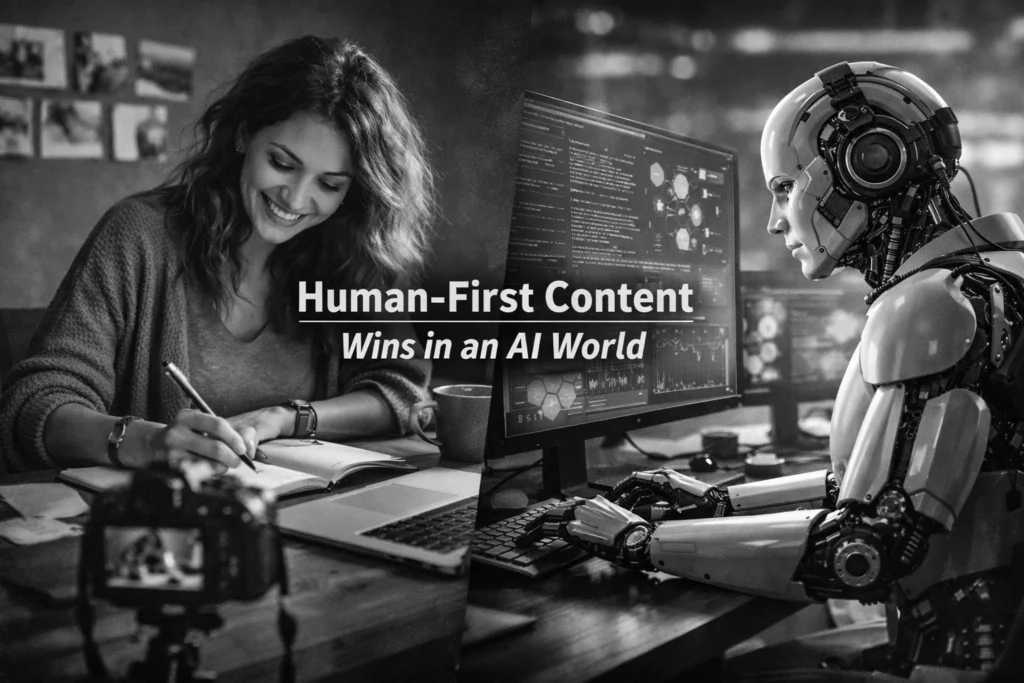
As AI-generated content floods the internet, audiences are craving authenticity more than ever. Perfectly polished messaging often feels artificial and fails to create emotional connection. Consumers are increasingly drawn to real stories, genuine voices, and relatable experiences. This shift is driving the rise of human-first marketing as a core pillar of the Top Marketing Trends 2026.
To succeed, brands must prioritize authenticity over perfection. Founder-led storytelling, creator collaborations, and community-driven narratives are becoming essential. Instead of sounding “smart,” brands need to feel human and approachable. Effective strategies include:
- Sharing behind-the-scenes content
- Highlighting real customer experiences
- Building transparent communication channels
Search Is Evolving: From SEO to AEO
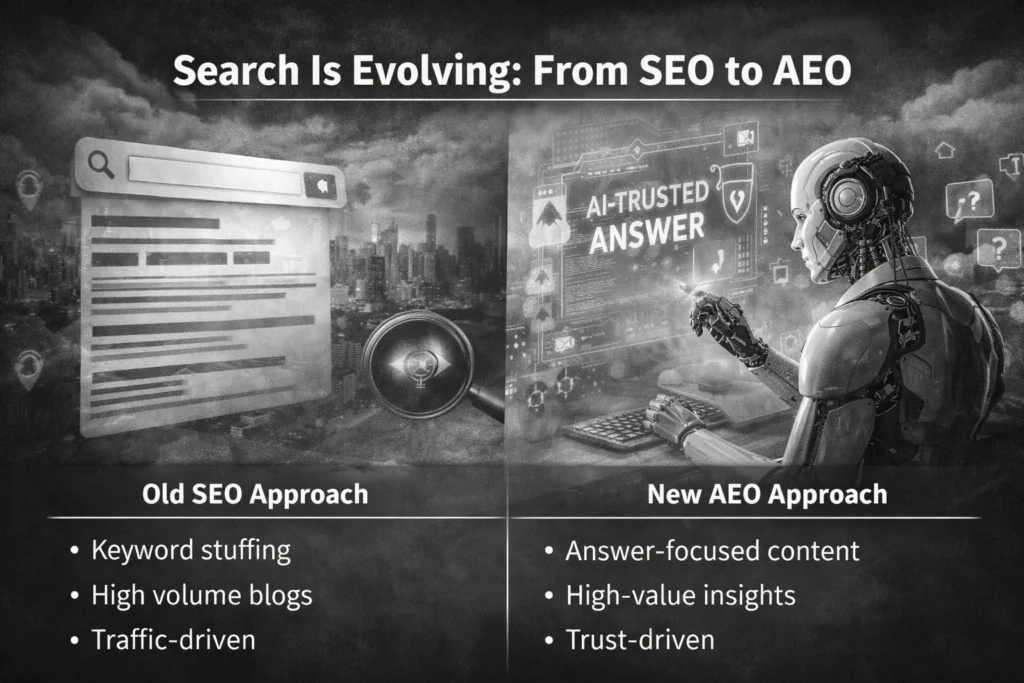
Search behavior is undergoing a major transformation with the rise of AI-powered engines. Users now expect direct answers instead of scrolling through multiple links. This shift is redefining traditional SEO into Answer Engine Optimization (AEO), a key component of marketing trends 2026. Content must now be structured, credible, and insightful enough for AI systems to trust and recommend.
For businesses, this means focusing on depth rather than volume. Generic keyword-stuffed content is losing relevance, while expert-driven insights are gaining traction. A strong digital marketing strategy 2026 should include:
| Old SEO Approach | New AEO Approach |
| Keyword stuffing | Answer-focused content |
| High volume blogs | High-value insights |
| Traffic-driven | Trust-driven |
| Surface-level info | Deep expertise |
Creativity Is the New Performance Marketing
Performance marketing is no longer just about targeting and optimization. In 2026, creativity has become the most powerful driver of engagement and conversions. As privacy regulations limit targeting precision, brands must rely on compelling content to capture attention. This shift makes creativity a core component of the Top Marketing Trends 2026.
Brands that entertain, surprise, and emotionally engage audiences outperform those relying purely on data. The focus is shifting from interrupting users to attracting them naturally. To leverage this trend:
- Invest in storytelling and unique concepts
- Experiment with bold and unconventional ideas
- Treat content as entertainment, not just promotion
Distribution Becomes the Real Competitive Advantage
Creating great content is no longer enough; distribution determines success. With rising ad costs and declining organic reach, brands must build their own ecosystems. Communities, creator networks, and loyal audiences are becoming key growth drivers. This makes distribution a critical pillar of the future of digital marketing strategy.
Brands that build strong communities reduce reliance on paid advertising. Customers become advocates, amplifying reach organically. Effective distribution strategies include:
- Building engaged online communities
- Collaborating with creators and influencers
- Leveraging user-generated content
The Anti-Hype Era: Strategy Over Trends
Marketing in 2026 is entering a more mature phase. Instead of chasing every new trend or tool, successful brands are focusing on fundamentals. Clear positioning, consistent messaging, and long-term thinking are outperforming short-term experimentation. This shift defines one of the most important Top Marketing Trends 2026.
Marketers must learn to filter hype from real value. Not every innovation delivers meaningful results, and chasing trends can dilute brand identity. A smarter approach includes:
- Prioritizing long-term brand building
- Evaluating trends based on real impact
- Maintaining consistency across channels
Absurd Creativity and Playful Chaos
One of the most surprising trends in 2026 is the rise of unconventional marketing. Content that is unexpected, playful, and slightly chaotic is capturing attention. In a world of predictable messaging, randomness and humor stand out. This reflects a cultural shift in how audiences consume digital content.
Brands that embrace creativity without overthinking are seeing strong engagement. The goal is not to be strange, but to be memorable. To implement this trend:
- Use humor and internet culture references
- Experiment with unconventional formats
- Focus on storytelling that sparks curiosity
The IKEA Effect: Customers as Co-Creators
Modern marketing is shifting from engagement to participation. Customers no longer want to just consume content—they want to be part of the brand journey. This aligns with the psychological concept known as the IKEA Effect, where people value what they help create.
Brands that involve their audiences build stronger loyalty and trust. Community-driven initiatives and user-generated content are becoming essential strategies. To apply this concept:
- Invite customer feedback in product development
- Encourage user-generated content
- Build interactive brand experiences
Final Thoughts: Marketing Becomes Human Again
The biggest takeaway from the Top Marketing Trends 2026 is clear: technology is accelerating marketing, but humanity is what differentiates it. AI will continue to improve efficiency, but it cannot replace trust, creativity, or emotional connection. Brands that focus only on automation will struggle to stand out.
The future of marketing lies in building relationships, not just campaigns. Businesses that combine strategy, creativity, and authenticity will lead the next era of growth. To stay ahead, marketers must embrace change while staying grounded in human insight. The brands that win in 2026 will not be the loudest they will be the most meaningful.
FAQs
1. What are the Top Marketing Trends 2026?
The Top Marketing Trends 2026 include AI-driven strategy, human-first content, AEO (Answer Engine Optimization), creativity-led performance marketing, and community-driven growth.
2. How is AI changing marketing in 2026?
AI is automating execution, allowing marketers to focus more on strategy, creativity, and customer understanding.
3. What is AEO in digital marketing?
AEO (Answer Engine Optimization) focuses on creating content that directly answers user queries and is easily understood by AI systems.
4. Why is human-first marketing important?
Because audiences prefer authentic, relatable content over automated and overly polished messaging.
5. How can brands stay competitive in 2026?
By focusing on strategy, creativity, community building, and delivering meaningful customer experiences instead of chasing trends.