Introduction: Why Sustainable Supply Chains Define Fashion’s Future
The global fashion industry is undergoing a deep transformation as environmental pressure, ethical concerns, and consumer awareness converge. In 2025, brands are no longer judged only by style or price but by how responsibly their products are made and delivered. Sustainable Supply Chains are now at the center of this shift, influencing everything from sourcing raw materials to last-mile delivery. Fashion leaders are realizing that sustainability is not a trend but a long-term business strategy tied to trust, resilience, and relevance.
At the same time, digital tools, data transparency, and leadership accountability are reshaping how supply chains operate. Companies that once relied on opaque networks are moving toward traceable, circular, and inclusive systems. This evolution aligns with Global business transformation and Digital innovation insights, helping fashion brands meet regulatory demands while building loyalty with conscious consumers.
The Evolution of Sustainable Supply Chains in Fashion
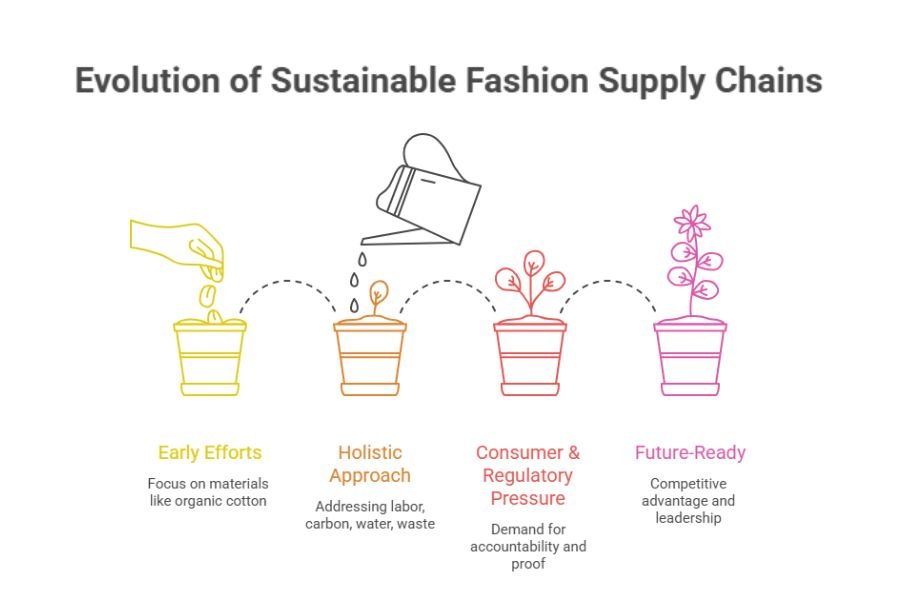
The journey toward Sustainable Supply Chains in fashion did not happen overnight. Early sustainability efforts focused mainly on materials like organic cotton or recycled polyester. In 2025, the approach is far more holistic, addressing labor practices, carbon emissions, water usage, and waste across the entire value chain. Brands now view sustainability as an interconnected system rather than a single initiative.
This evolution has been driven by both consumer expectations and regulatory pressure. Governments and global organizations are demanding greater accountability, while customers expect proof, not promises. Fashion companies that adapt early gain competitive advantage, positioning themselves as Future-ready business leaders capable of navigating complexity and change.
Technology Powering Sustainable Supply Chains
Technology plays a critical role in strengthening Sustainable Supply Chains across fashion ecosystems. Tools like blockchain, IoT sensors, and AI-driven analytics provide real-time visibility into sourcing, production, and logistics. These technologies help brands verify ethical practices, reduce inefficiencies, and respond quickly to disruptions.
Beyond transparency, technology enables predictive planning. AI-powered demand forecasting minimizes overproduction, while digital twins allow brands to simulate supply chain decisions before implementing them. These innovations support Sustainable technology practices and demonstrate how Digital transformation leadership is reshaping fashion operations.
Ethical Sourcing and Sustainable Supply Chains
Ethical sourcing remains one of the most visible pillars of it. In 2025, brands are expected to ensure fair wages, safe working conditions, and community development across all supplier relationships. Transparency platforms allow stakeholders to trace garments back to their origin, building trust through accountability.
Ethical sourcing also strengthens long-term supplier partnerships. Instead of chasing the lowest cost, brands invest in stable relationships that improve quality and reliability. This shift reflects Inclusive technology innovation and Technology for social impact, proving that ethical responsibility and profitability can coexist.
Circular Fashion and Sustainable Supply Chains
Circularity is redefining Sustainable Supply Chains by extending the life cycle of fashion products. Brands are designing garments for reuse, repair, and recycling, reducing dependence on virgin resources. In 2025, resale platforms, take-back programs, and material recovery systems are integral parts of supply chain strategy.
Circular models also open new revenue streams while reducing environmental impact. By keeping materials in use longer, companies cut waste and emissions. This approach aligns with Building innovation culture and Emerging tech trends 2025, encouraging experimentation and cross-industry collaboration.
The Role of Leadership in Sustainable Supply Chains
Strong leadership is essential to embed it into fashion organizations. Leaders must align sustainability goals with business strategy, ensuring teams understand both the purpose and the metrics behind responsible practices. This requires AI leadership skills, data literacy, and the ability to manage change across complex networks.
Effective leaders also foster accountability and transparency. By setting clear expectations and measuring progress, they turn sustainability from a marketing message into an operational reality. This leadership mindset supports Tech leadership strategies and prepares organizations for long-term resilience.
AI and Data Driving Sustainable Supply Chains
Data intelligence is transforming Sustainable Supply Chains by enabling smarter decision-making. AI systems analyze supplier performance, environmental impact, and logistics efficiency to identify risks and opportunities. These insights help brands optimize inventory, reduce waste, and improve forecasting accuracy.
AI also supports compliance and reporting, which are increasingly critical in 2025. Automated data collection simplifies sustainability audits and regulatory disclosures. This integration of technology and responsibility reflects Future of work technology and Startup growth strategies within the fashion ecosystem.
Cross-Border Challenges in Sustainable Supply Chains
Managing Sustainable Supply Chains across borders presents unique challenges. Different regulations, cultural norms, and infrastructure levels complicate sustainability efforts. In 2025, brands must navigate these complexities while maintaining consistent standards across regions.
Cross-border collaboration requires clear communication and shared values. Digital platforms help synchronize expectations and performance metrics globally. This approach supports Cross-border business expansion and ensures sustainability commitments are upheld throughout the supply network.
Startups and Innovation in Sustainable Supply Chains
Startups are accelerating progress in Sustainable Supply Chains by introducing agile solutions and fresh perspectives. From biodegradable materials to AI-powered traceability tools, startups challenge traditional models and push established brands to innovate faster.
These innovators benefit from Mentorship for entrepreneurs and partnerships with larger organizations. By working together, startups and corporations scale sustainable solutions more effectively. This collaboration fuels Digital innovation insights and keeps the fashion industry adaptive.
Measuring Impact in Sustainable Supply Chains
Measuring the effectiveness of Sustainable Supply Chains is critical for credibility and improvement. In 2025, brands rely on standardized metrics covering carbon footprint, water usage, labor conditions, and waste reduction. Transparent reporting builds trust with investors, regulators, and consumers.
Workforce Transformation and Sustainable Supply Chains
People remain at the heart of it. As automation and digital tools expand, the workforce must adapt through reskilling and upskilling. Training programs focused on sustainability literacy and digital competence empower employees to contribute meaningfully.
This transformation supports inclusive growth and long-term resilience. Companies that invest in their people strengthen organizational culture and innovation capacity. These efforts align with Future-ready business leaders and Inclusive technology innovation.
Consumer Trust and Sustainable Supply Chains
Consumer trust is directly linked to Sustainable Supply Chains. In 2025, shoppers expect transparency, authenticity, and accountability. Brands that communicate openly about their practices earn loyalty, while those caught greenwashing face reputational damage.
Storytelling plays a powerful role in building trust. Sharing verified data and human stories behind products connects consumers emotionally to sustainability efforts. This strategy reinforces Technology for social impact and strengthens brand equity.
The Business Case for Sustainable Supply Chains
The financial benefits of it are increasingly clear. Reduced waste, efficient resource use, and resilient supplier networks lower costs and mitigate risks. Sustainability also attracts investors and partners focused on long-term value creation.
Brands that integrate sustainability into core strategy outperform those treating it as an add-on. This alignment supports Digital transformation leadership and positions companies for durable growth in a volatile global market.
Build Sustainable Fashion Futures
If you are ready to strengthen your fashion strategy through responsible innovation and resilient supply networks, now is the time to act. Connect with Mustasam Abbasi to explore collaboration opportunities, speaking engagements, or consulting support at Mustasam Abbasi and begin shaping supply chains built for the future.
Conclusion: Shaping Fashion’s Responsible Future
As fashion moves deeper into 2025, sustainability is no longer optional—it is foundational. Brands that embrace responsible sourcing, digital innovation, and ethical leadership will define the next era of the industry. By investing in transparency, collaboration, and people, organizations can turn sustainability into a competitive advantage. To move forward with confidence, connect with mustasam abbasi, implement the strategies discussed, and take part in building a fashion industry that values impact as much as creativity.
FAQs
What makes fashion supply chains sustainable in 2025?
They prioritize transparency, ethical sourcing, circularity, and technology-driven efficiency across the entire value chain.
How does technology support sustainable fashion?
Technology enables traceability, predictive planning, impact measurement, and compliance through data and AI tools.
Are sustainable supply chains more expensive?
While initial investment may be higher, long-term savings, risk reduction, and brand loyalty often outweigh costs.
What role do consumers play?
Consumer demand for transparency and ethics pressures brands to adopt and maintain responsible practices.
Can small fashion brands adopt sustainability?
Yes. Digital tools, partnerships, and startup ecosystems make sustainability more accessible than ever.